
New Zealand has a way of keeping you on your toes. One afternoon you are sitting in warm Coromandel sunshine, and by nightfall a southerly is rattling your tent pegs, and the rain is hammering the fly. It is one of the things that makes camping here so memorable, whether you are pitching up beside a Northland beach or somewhere deep in the South Island.
That unpredictability is exactly why choosing between inflatable air-frame tents and traditional pole tents deserves more thought than it usually gets. Both technologies have loyal fans among Kiwi campers. Both can handle a wet night if they are well made. The one that is right for you comes down to how you camp, where you go, and what conditions you are likely to face.
Since 1987, Kiwi Camping has been designing and testing camping tents across New Zealand conditions. Across that time, both air-frame and traditional pole designs have earned their place in the range. This guide breaks down the real-world differences so you can choose with confidence, and if you want to browse while you read, the full Kiwi Camping tent range is worth a look alongside it.
This guide covers:
Understanding the Difference Between Air-Frame and Traditional Tents
What Is an Inflatable Air-Frame Tent?
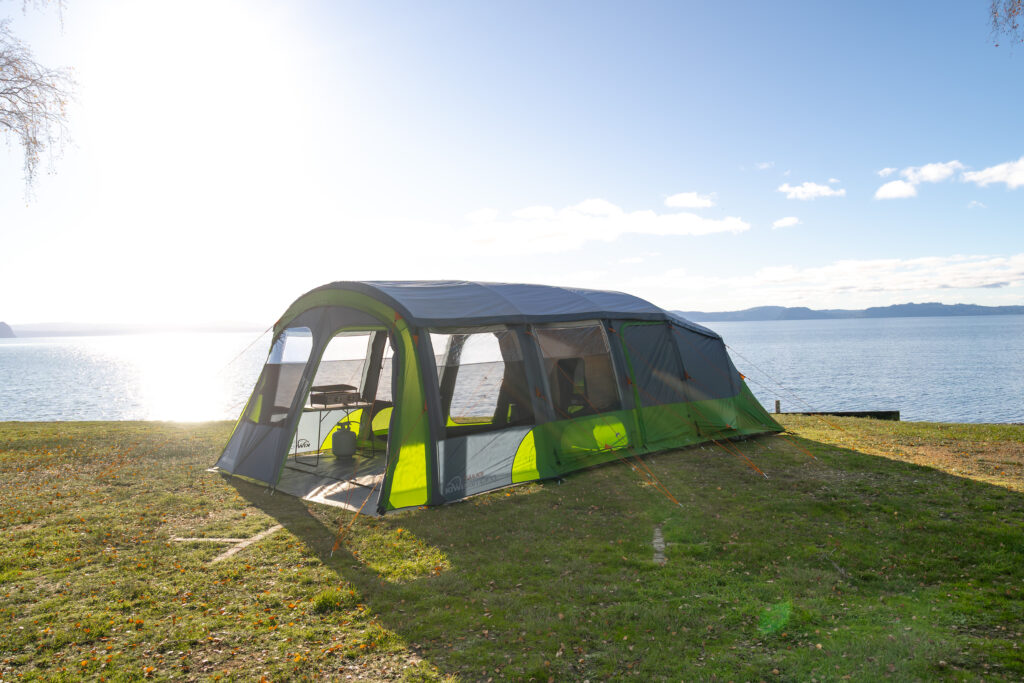
Inflatable air-frame tents are one of the more satisfying developments in camping gear in recent years. Instead of rigid poles, they use flexible air tubes built into the structure. Connect a pump to the valve, inflate for a few minutes, and the tent rises in front of you. No poles to thread, no sleeves to wrestle with, no parts to drop in the dark.
The air beams are made from tough materials designed to flex under pressure rather than snap. When a gust hits, the beam bends with it and springs back once the pressure eases. That resilience is a big part of why inflatable tents have won over so many NZ campers, particularly families who want a reliable setup without the fuss.
Kiwi Camping’s Tui Auto Inflating Air Tent range and Moa Air Tent range are both built on this air-beam principle, designed specifically for New Zealand family camping.
What Is a Traditional Pole Tent?
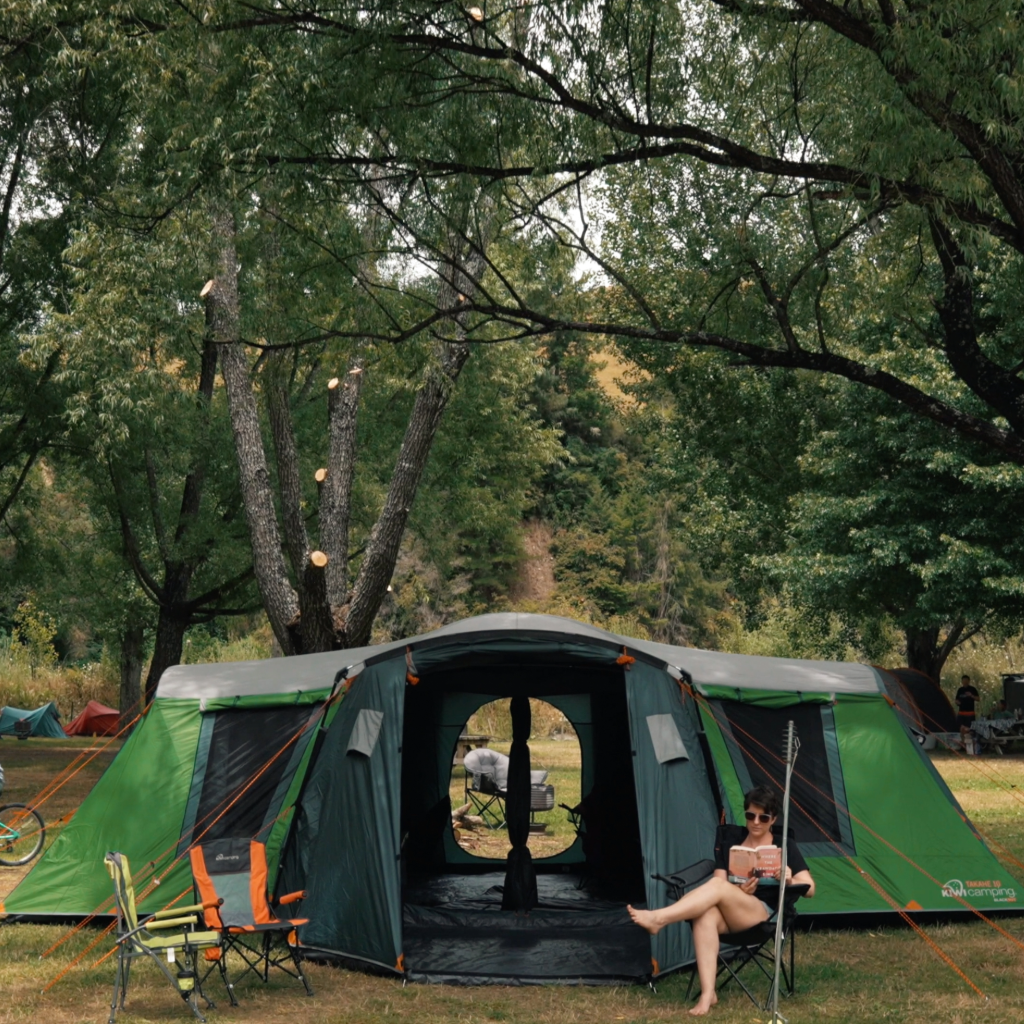
Traditional tents use rigid fibreglass or aluminium poles to create their structure. The poles slot together, thread through sleeves or clip to the fly, and you peg the tent out from there. It is the system most campers grew up with.
Pole tents have been refined over decades. They are dependable, easy to repair in the field, and available across a huge range of sizes from compact tramping shelters to large family tents you can stand up in.
Key Differences at a Glance
The structure and setup process are the most obvious differences, but they flow into everything else: how the tent behaves in wind, how quickly you can get it up after a long drive, and what happens if something goes wrong mid-trip. Both designs offer strong weather protection when quality materials and construction are used.
Setup Speed: Which Tent Is Easier to Pitch?
Inflatable tents have a clear edge for speed in most conditions. Lay the tent out flat, connect the pump to the valve, inflate for a few minutes, and you are done. There are no poles to untangle, no sleeves to thread in fading light, and no risk of getting a pole section the wrong way around.
For families arriving at a holiday park after a long drive with tired kids in the back, that simplicity is genuinely valuable. It also helps on those afternoons when the wind picks up just as you are trying to get the tent up.
Traditional pole tents require a bit more involvement. For experienced campers, it becomes second nature and is not particularly slow. Most mid-size family tents can be up in 15 to 20 minutes once you have done it a few times. The process is straightforward, and there is nothing to go wrong mechanically.
Air-frame designs suit anyone who wants to spend less time on setup and more time enjoying where they are. Traditional poles work perfectly well for campers who have a routine they trust and prefer a familiar system.
Performance in Wind and Rain
This is the question that matters most in New Zealand, where conditions can shift rapidly in alpine areas, on exposed coastlines, and anywhere south of Cook Strait.
Wind Resistance
A common assumption is that rigid poles are stronger in wind than air beams. In reality, modern air-beam construction has a different kind of strength. The beams flex under load and spring back when the pressure eases. That gives them good resilience in sustained wind and gusts. Traditional poles, particularly fibreglass ones, can be more prone to snapping under extreme lateral force.
That said, tent geometry matters as much as frame type. A low-profile, well-guyed tent with a properly pegged footprint will outperform a poorly pitched tent of any design. Always use all the guy rope points and stake them out properly, especially in exposed sites.
The MetService is a reliable resource for checking local forecast conditions before you head out, particularly if you are camping in exposed or alpine areas.
Rain Protection
Waterproofing depends on materials and construction, not frame type. Look for high hydrostatic head ratings, seam-sealed construction, and a full outer fly that extends close to the ground. Good quality tents of either type handle NZ rain well. A tent with a low waterproof rating will leak regardless of whether it uses poles or air beams.
Double-stitched seams, quality fly fabric, and solid peg points all contribute more to rain performance than the frame system.
Comfort, Space and Family Camping
Air-frame designs often deliver good headroom because the beam geometry creates near-vertical walls. That translates to usable living space across a wider area of the tent floor, rather than the sloping interior common to some traditional designs.
For family camping at holiday parks or campgrounds, that extra headroom makes a noticeable difference over a long weekend. You can move around comfortably, get kids dressed without contorting, and store gear without piling it in the corners.
Traditional pole tents, particularly larger family tents with cabin-style designs, can also offer excellent standing room. Many have multiple rooms, large awnings, and separate sleeping zones that suit longer stays well.
For a weekend camping trip close to home, both designs work well. For a two-week summer holiday with kids and all the gear that comes with it, consider which layout best suits how your family uses the space.
Durability and Long-Term Ownership
Air-Beam Punctures: The Real Picture
Punctures are the most common concern people raise about inflatable tents. In practice, well-made air beams are robust, and punctures are uncommon during normal use. The beams are enclosed inside sleeves and are not directly exposed to sharp objects.
When a puncture does occur, it is repairable. Kiwi Camping stocks repair kits including Tear Aid patches that work on air-beam material. Carrying one on any trip is sensible. A slow leak is inconvenient; it is not a disaster.
Maintaining Pole Tents
Fibreglass poles can snap at the connecting joints if they take a hard knock or are stored under tension for long periods. Aluminium poles are more resilient but can bend. Replacement poles and shock cord are easy to source and carry, and most repairs can be done in the field with minimal tools.
Both systems have their maintenance considerations. Regular cleaning, proper drying before storage, and carrying a basic repair kit will extend the life of either design significantly. Storing a damp tent is the fastest way to shorten its life regardless of what type it is.
Kiwi Camping’s spare parts and accessories range covers repair options for both tent types.
Which Tent Type Is Best for Different Campers?
There is no single right answer. The table below gives a practical starting point based on camping style.
Camper Type | Air-Frame | Traditional Pole |
Family campers | Excellent: fast setup, great headroom | Good: wide range of sizes available |
Weekend campers | Excellent: convenience is key | Good: familiar and reliable |
Road trippers / caravan travellers | Excellent: quick to set up and pack down | Good: dependable for repeated use |
Adventure / tramping campers | Not ideal: heavier and bulkier to carry | Excellent: lightweight options available |
First-time campers | Excellent: simple and stress-free | Good: familiar concept, many options |
Seasonal / winter campers | Good: flexible beams handle wind well | Good: proven in tough NZ conditions |
Why Kiwi Camping Designs Tents for New Zealand Conditions
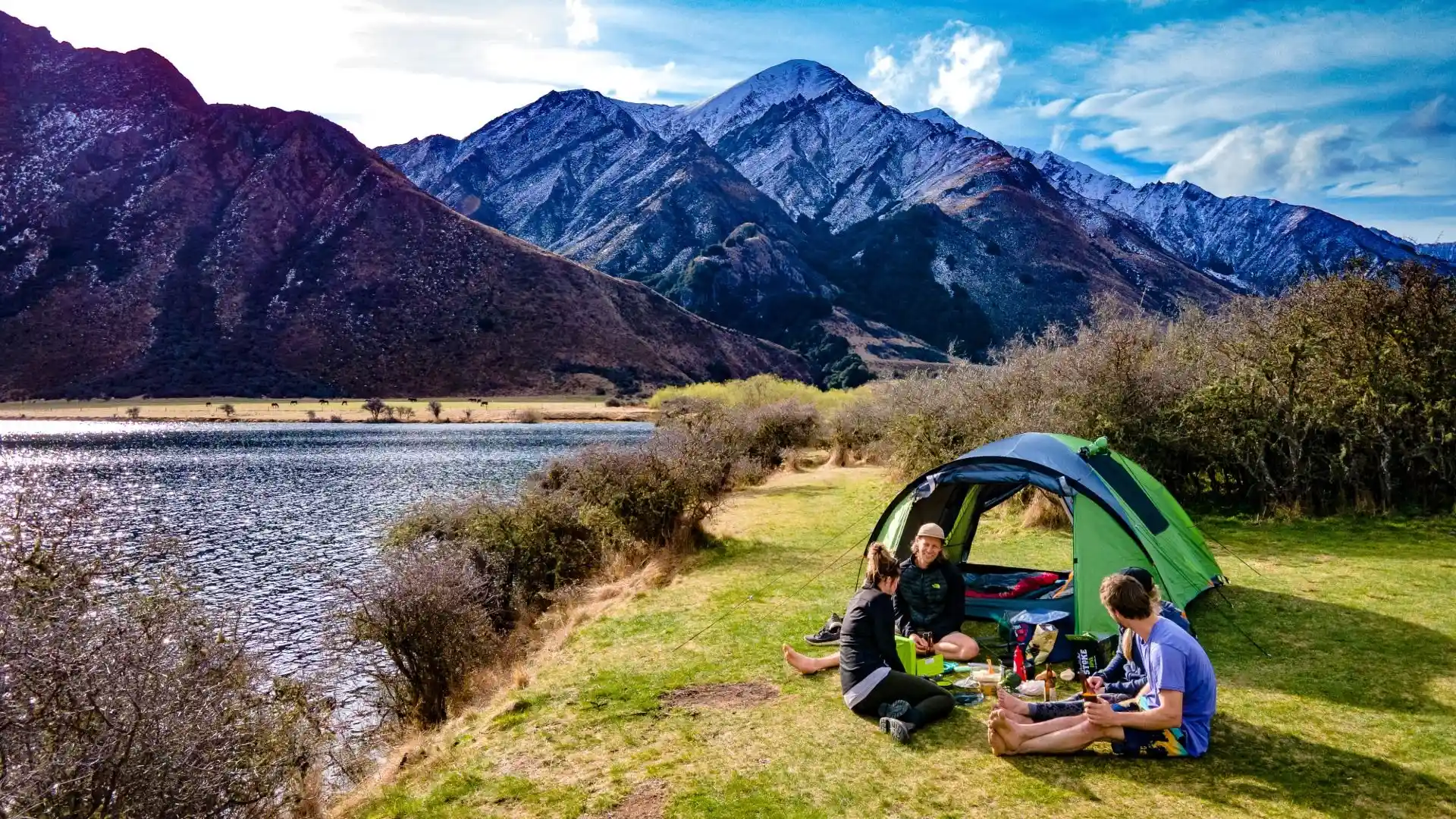
Kiwi Camping has been making gear for New Zealand campers since 1987. That is nearly four decades of wet weekends, muddy boot prints, and southerly changes. It means the range has been shaped by real feedback from real conditions, not just specifications on a data sheet.
The family tent range covers both air-frame and traditional pole options for car camping and holiday parks. The recreational tent range suits weekend campers who want something practical and reliable. The adventure tent range is built for trampers and those heading into more demanding terrain.
Across all three categories, the focus is the same: gear that does what it says it will do when conditions turn rough. Whether that is a Tui air tent standing firm on an exposed Canterbury campsite or a lightweight tramping tent shrugging off a night of West Coast drizzle, the standard is set by what New Zealand actually throws at you.
If you are heading into conservation land for any of your camping, it is worth checking current track and hut information through the Department of Conservation before you go.
Frequently Asked Questions
Are Inflatable Tents Good in Strong Wind?
Yes, modern air-beam tents are designed to flex under wind load and recover rather than snapping. They perform well in sustained wind and gusts when properly pegged out. Using all the guy rope points is essential in exposed conditions.
Do Air-Frame Tents Leak?
A well-made air tent with high waterproof ratings and seam-sealed construction handles NZ rain effectively. Leaking is a sign of poor construction or inadequate waterproof ratings, not air-frame design specifically.
Are Traditional Pole Tents Stronger Than Inflatable Tents?
Not necessarily. The two systems have different kinds of strength. Pole tents are rigid and familiar. Air-beam tents flex under pressure. In real-world wind conditions, well-designed air beams can be highly resilient. Build quality and tent geometry matter more than frame type.
Which Tent Is Better for Family Camping?
Air-frame tents are popular with families because of their fast setup and good headroom. Traditional pole family tents offer excellent space and durability. Both work well for holiday park and campground use. The choice often comes down to personal preference.
What Tents Are Best for New Zealand Weather?
Tents with high hydrostatic head ratings, seam-sealed construction, strong peg points, and well-anchored guy rope points are best suited to NZ conditions. Waterproof camping tents in either air-frame or pole designs can handle our weather when construction quality is high.
How Long Do Inflatable Tents Last?
With proper care, including drying thoroughly before storage and carrying a repair kit, a quality air-frame tent will last many years. The air beams are durable and punctures during normal use are uncommon. Regular maintenance extends the life of any tent significantly.
Start Your Next Camping Adventure with Kiwi Camping
There is no universal right answer between inflatable air-frame and traditional pole tents. Both can handle New Zealand weather. Both have genuine strengths. The one that works best for you depends on how you camp, who you camp with, and where you are heading.
Families and weekend campers who value fast setup and good living space tend to love air-frame designs. Adventure campers, trampers, and those who want the lightest possible kit will find traditional pole tents in compact, trail-ready formats more practical.
Take the time to think through your most common camping scenarios before buying. Consider the conditions you are likely to face, how far you need to carry the tent, and what setup experience you want at the end of a long travel day.
Whether you need a spacious air tent for a Coromandel summer holiday or a compact traditional tent for a track in the Kaweka Ranges, shop the Kiwi Camping tent range to find the right fit for your next adventure, or reach out to one of our friendly, experienced team who are always happy to help guide you in the right direction.